

Origin and Evolution
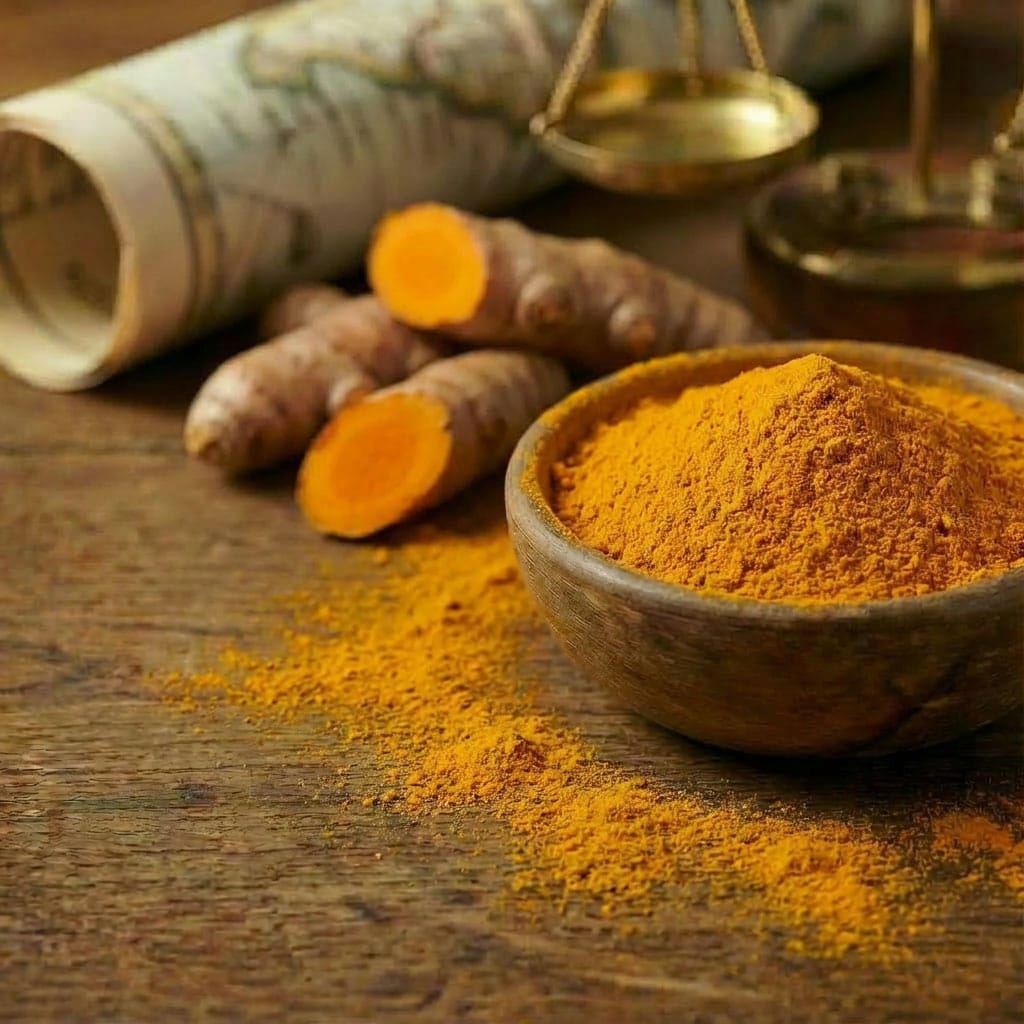
Turmeric (Curcuma longa) is a rhizomatous root belonging to the ginger family. Native to Southeast Asia - especially India - it has been cultivated for more than 4,000 years and is widely used in traditional cooking and herbal practices.
Flavor Profile
The underground root has a vivid yellow-orange color due to curcumin. It offers a dry aroma and an earthy flavor with slightly bitter and gently peppery notes.
Health Benefits
Turmeric is well known for its anti-inflammatory and antioxidant properties, mainly attributed to curcumin. It is traditionally associated with supporting joint comfort, digestion, cardiovascular health, and overall wellness.
Culinary Applications
Turmeric is available fresh as a root or dried and ground. Briefly sautéing it in oil at the beginning of cooking helps release its aroma and reduce its raw taste. It is widely used in soups, rice dishes, stews, vegetables, beverages, and breads.
Suggested Preparations
- Golden turmeric rice
- Vegetable cream soup
- Spiced roasted potatoes
- Mild hummus
- Aromatic turmeric bread