

Origin and Evolution
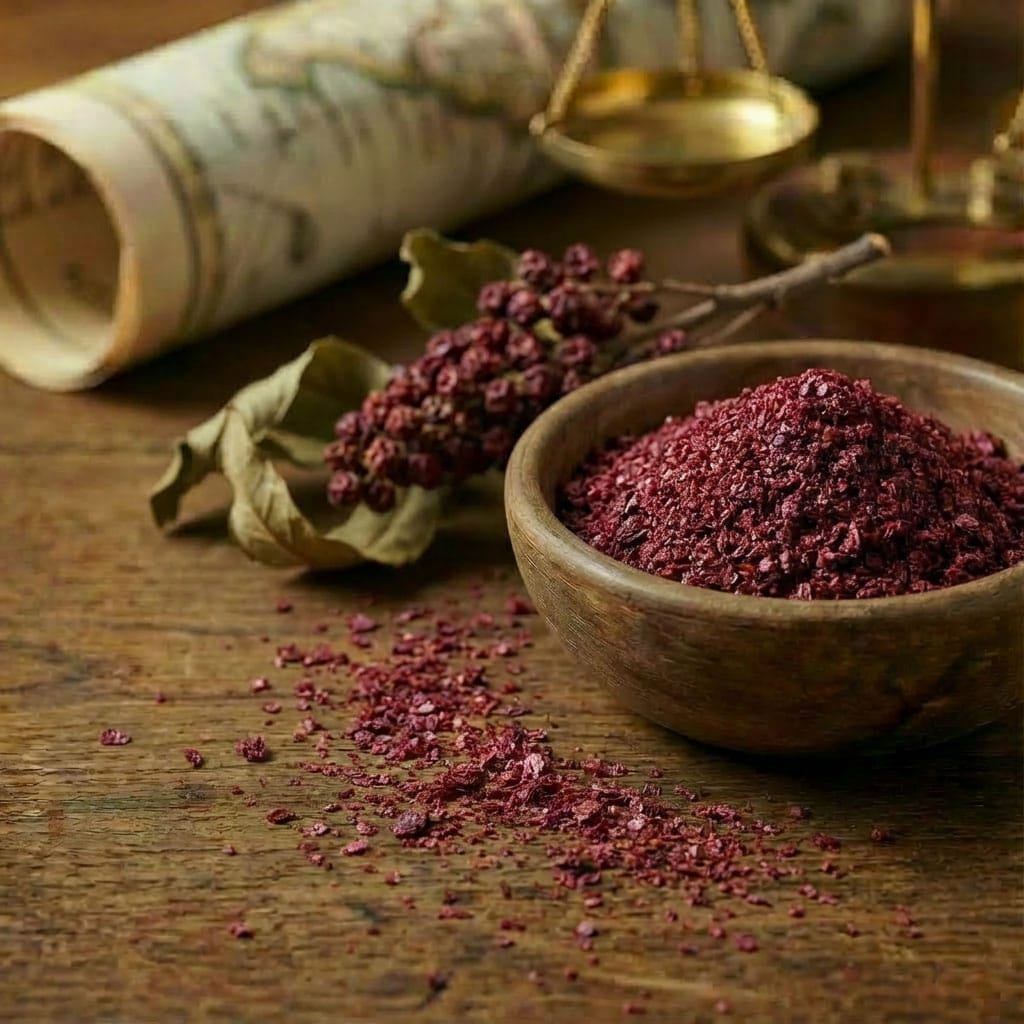
Sumac comes from the shrub Rhus coriaria, a member of the cashew family and a relative of the pistachio. It is native to the Mediterranean region and widely used in the cuisines of Iran, Lebanon, Turkey, and Syria.
Flavor Profile
The berries are harvested just before full ripeness, then dried and ground into a deep red powder. Sumac has a bright, tangy flavour with fruity and slightly citrusy notes.
Health Benefits
Sumac is rich in natural antioxidants and is known for its anti-inflammatory and antimicrobial properties. It is associated with digestive support and may help regulate cholesterol and blood sugar levels.
Culinary Applications
Often used as a finishing seasoning to add acidity without liquid, similar to lemon but in dry form. It is excellent for salads, marinades, and for seasoning lamb, chicken, or fish before grilling.
Suggested Preparations
- Mediterranean salad with sumac
- Oven-roasted chicken with a citrus touch
- Sea bass en papillote with sumac
- Roasted potatoes with herbs and sumac
- Lemon and sumac vinaigrette
- Dressed tomatoes with a Middle Eastern twist