

Origin and Evolution
From the Latin juniperus, juniper has been used since Antiquity by Roman and Alpine cultures. Over time, it became a classic seasoning in Central European charcuterie, meat dishes, and traditional beverages.
Flavor Profile
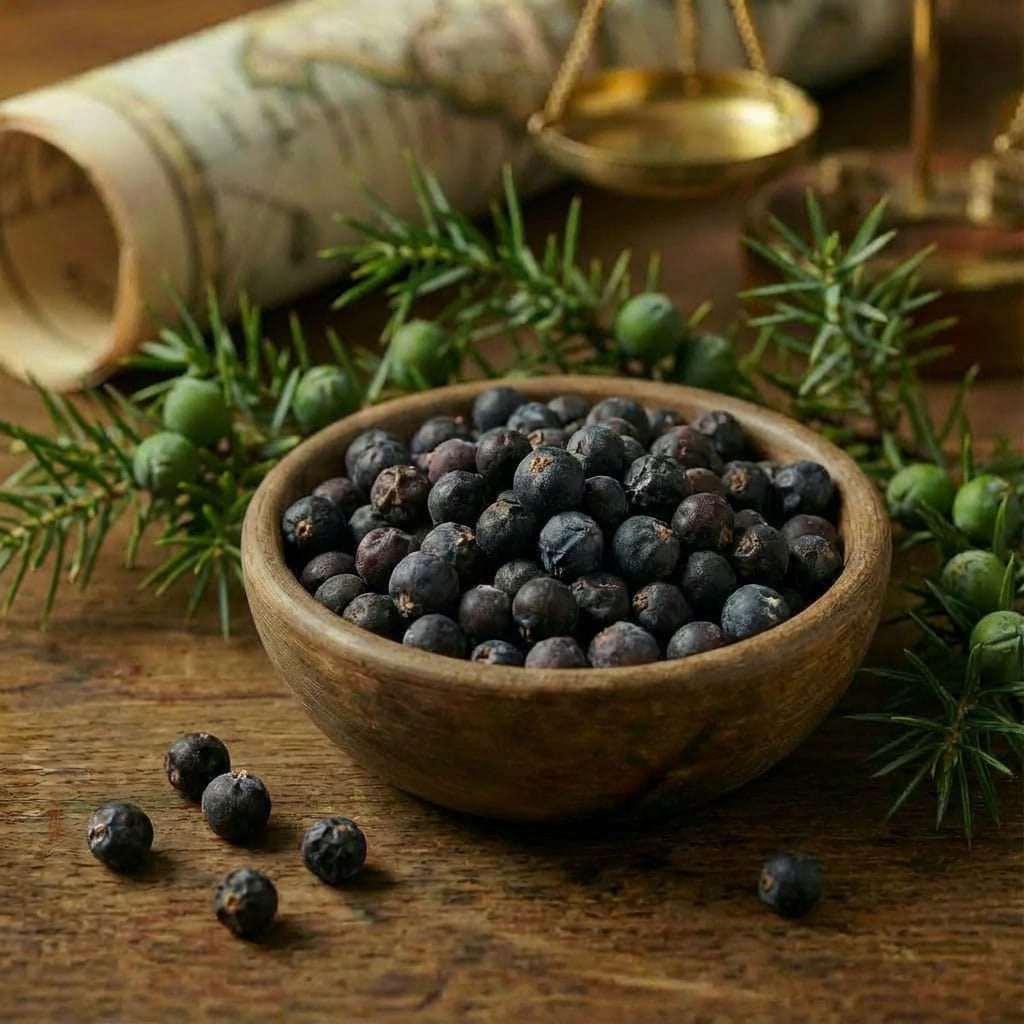
Dark, aromatic berries with a fresh, resinous, and woody aroma. The flavour is balsamic, with pine-like notes, lightly sweet and gently bitter. Highly concentrated and powerful, a small quantity provides significant aromatic impact.
Health Benefits
Traditionally valued for their digestive and diuretic properties. A common preparation involves infusing 1 teaspoon of lightly crushed berries in boiling water for 10–15 minutes. Rich in essential oils with antioxidant activity.
Culinary Applications
Ideal for game meats, pork, wine-based sauces, stews, sauerkraut, pâtés, and rustic breads. Berries should be gently crushed before use to release their essential oils, whether for cooking or infusions. Not recommended during pregnancy or for individuals with kidney conditions, as prolonged use may irritate the urinary tract.
Suggested Preparations
- Pork tenderloin with juniper sauce.
- Traditional Central European sauerkraut.
- Aromatic beef stew.
- Red wine sauce with juniper.
- Spiced country-style pâté.