

Origin and Evolution
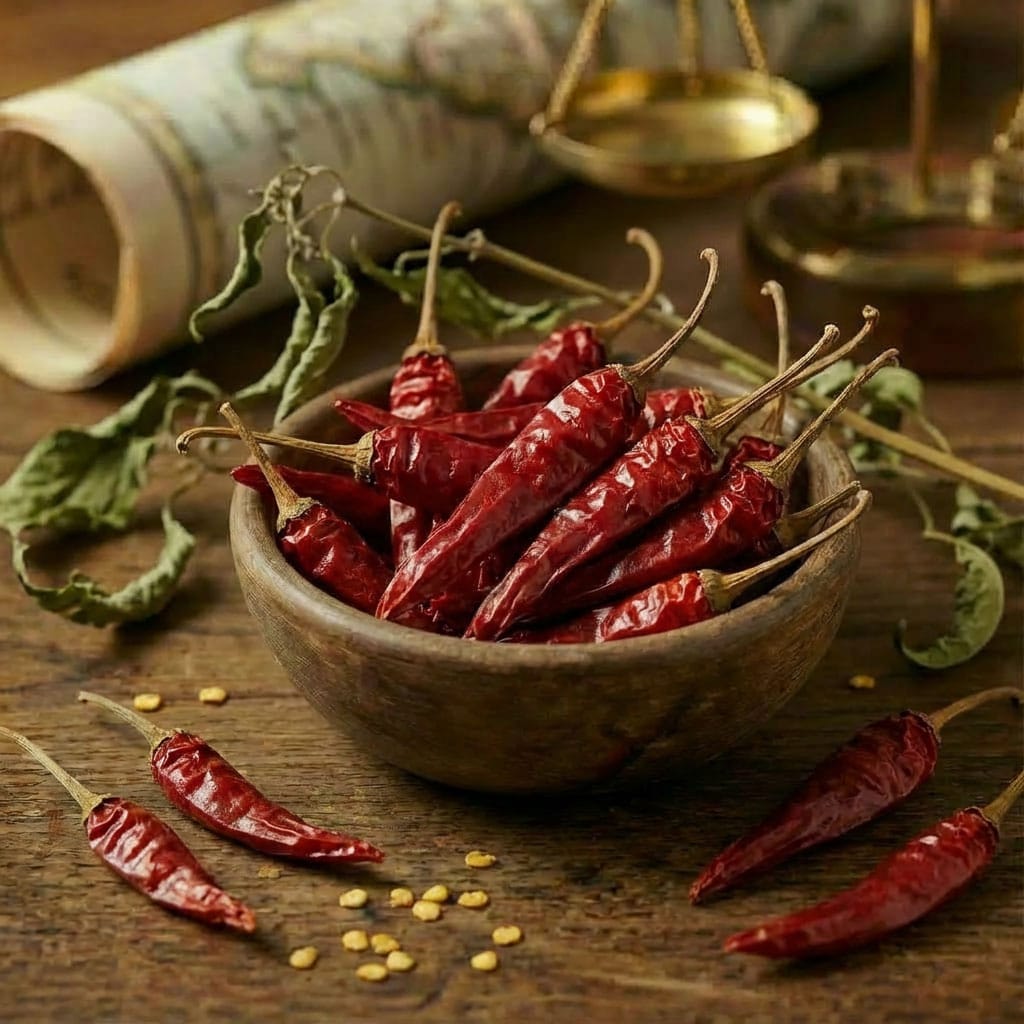
Long chili peppers belong to the species Capsicum annuum and originate from Central and South America. Cultivated for more than 6,000 years, they were considered sacred by the Aztec and Maya civilizations. After being introduced to Europe by Christopher Columbus in the 15th century, they quickly became integrated into Spanish cuisine.
Flavor Profile
Long, red pods with a vegetal aroma and subtle smoky nuances. They deliver medium to high heat, adding colour, character, and intensity to many dishes.
Health Benefits
Rich in vitamins, particularly vitamin C and vitamin A, which support the immune system. Chili peppers also provide antioxidant and mild diuretic properties and help stimulate blood circulation.
Culinary Applications
Used to add heat and depth to sauces, stews, spicy oils, and traditional dishes such as Spanish potato stews. They are also commonly incorporated into brava sauces, mayonnaises, dressings, soups, cured meats, rice dishes, and vegetable preparations.
Suggested Preparations
- Homemade chili oil.
- Potato and chorizo stew.
- Meatballs with spicy sauce.
- Beef stew with chili.
- Spanish omelette with a spicy touch.
- Homemade pasta arrabbiata.