

Origin and Evolution
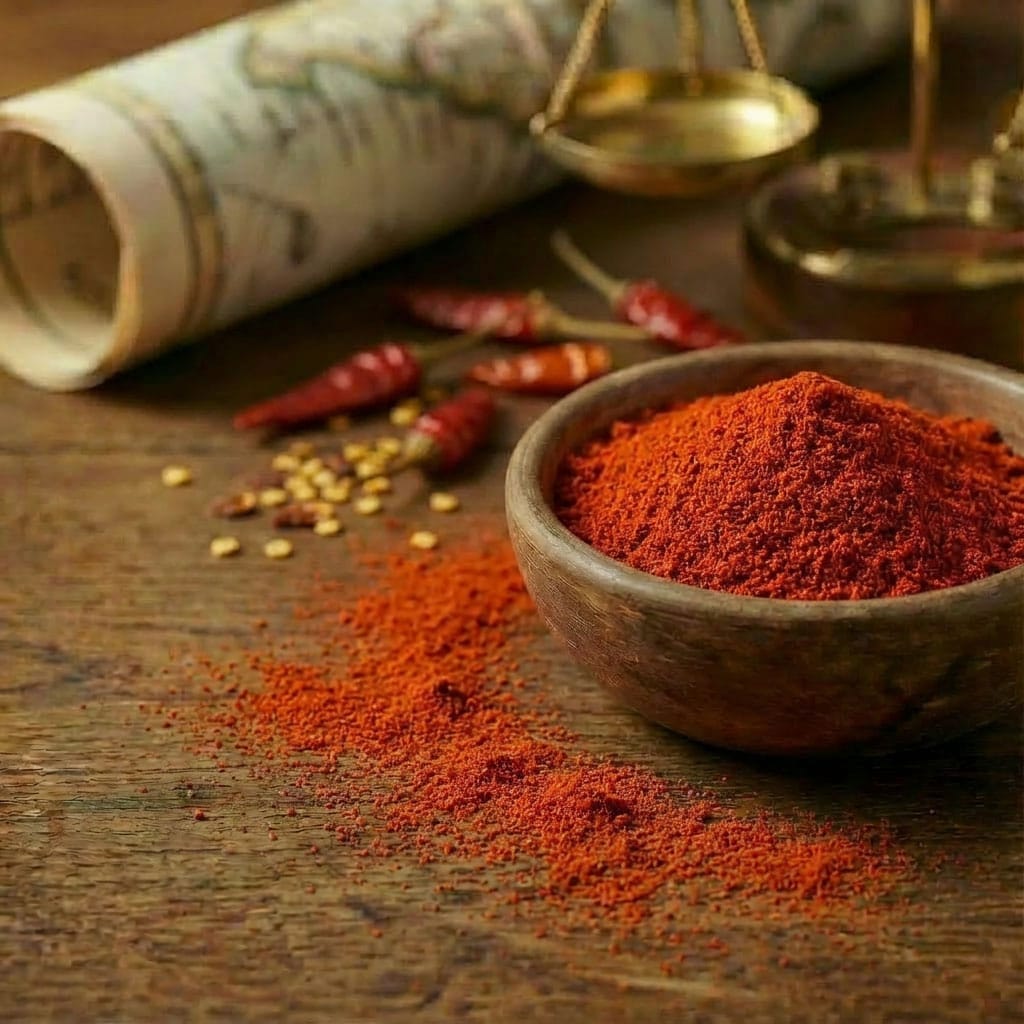
Sweet paprika is one of the stars of Spanish cuisine. It is made from red peppers of the species Capsicum annuum that are dried and finely ground. Introduced to Spain in the 16th century from the Americas, it evolved into distinctive regional styles highly valued in traditional cooking.
Flavor Profile
A vivid red powder with a sweet, vegetal aroma and a mild flavour. It adds vibrant colour to dishes. In Spain it is produced either by sun-drying the peppers (Murcia) or by drying them over oak wood smoke (La Vera, Cáceres), which gives the spice its characteristic smoky aroma.
Health Benefits
Sweet paprika is rich in antioxidants and particularly high in vitamins A and C. It is associated with supporting the immune system, aiding digestion, promoting healthy circulation, and contributing anti-inflammatory benefits.
Culinary Applications
Commonly added to sofritos and sautéed briefly before liquid ingredients are introduced to prevent burning, which can cause bitterness. Essential in dishes such as paella, patatas a la riojana, and Galician-style octopus. Also excellent as a finishing touch for eggs, hummus, sauces, rice dishes, fish, and vegetables.
Suggested Preparations
- Stuffed eggs
- Castilian garlic soup
- Mild chicken stew
- Paprika-flavoured aioli