

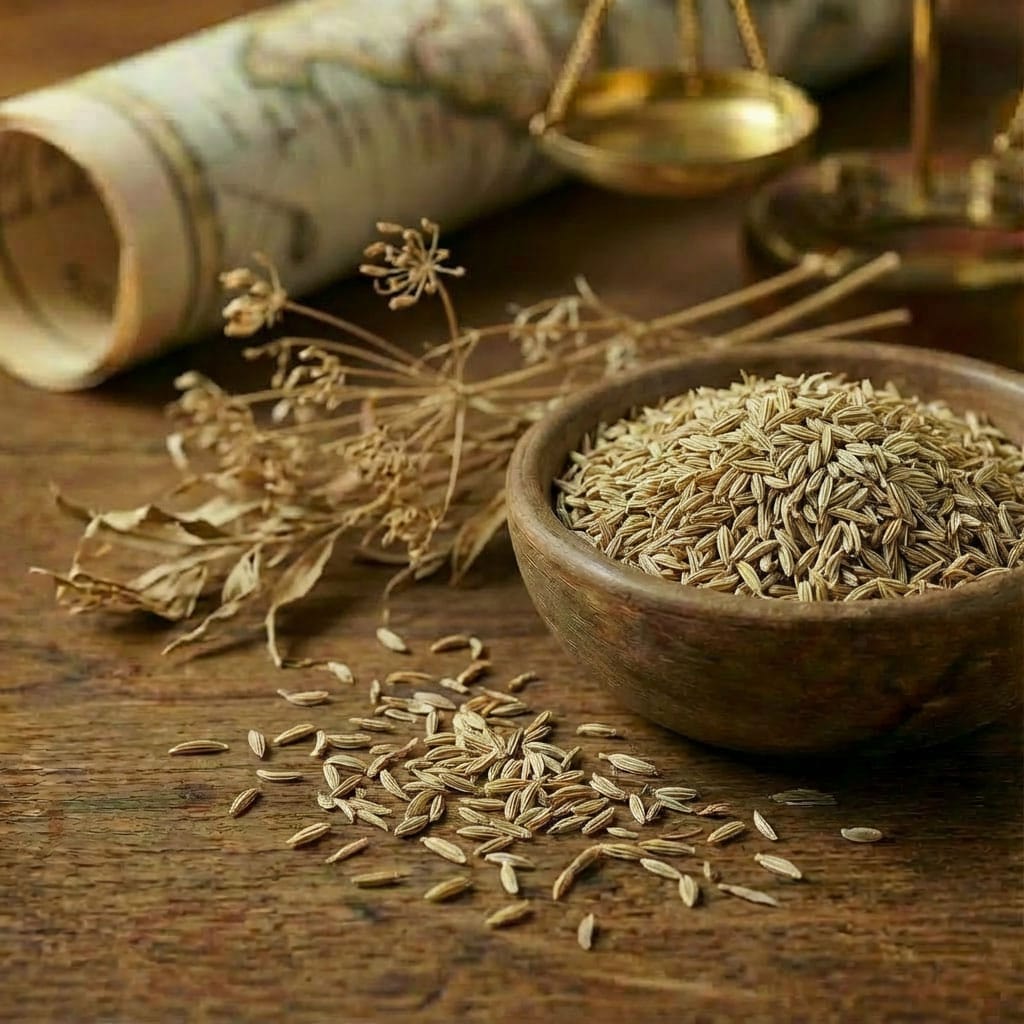
Origin and Evolution
An ancient spice from the Eastern Mediterranean and Western Asia. Widely used in Spanish cuisine, while India is today the world’s largest producer and consumer.
Flavor Profile
Small seeds with a warm, earthy aroma. The flavour is deep, slightly bitter, and gently spicy, adding character to stews, legumes, and charcuterie.
Health Benefits
Renowned for its digestive properties, cumin helps reduce gas and supports the body in processing heavier meals. It is also a natural source of iron.
Culinary Applications
Lightly toast the seeds in a dry pan for a few seconds until fragrant to enhance their flavour. They can then be crushed in a mortar for a fresher, more intense taste. Ideal for stews, curries, breads, legumes, marinades, sauces, and homemade spice blends. A staple in Middle Eastern and Mexican cuisines.
Suggested Preparations
- Lentil stew with cumin
- Traditional Castilian mashed potatoes (patatas revolconas)
- European-style cumin bread
- Traditional marinated pork
- Mild cumin hummus
- Mediterranean chickpea stew